What we take on, and how we check it
Most workshops write “we repair brakes”. This page says what we measure, and whether you can keep driving it in the meantime.
01
Scheduled service
The job with no symptom — and the one that keeps the next three years symptom-free.
What owners describe
- The sticker on the windscreen says so
- “It has been a while and I cannot remember the last time”
- Just bought it second-hand and want to know what you actually bought
What we check
- Engine oil and oil filter
- Air filter and cabin filter
- Spark plugs, if they are due
- Brake fluid — measured for water content, not judged by colour
- Coolant, and the radiator cap
- Automatic transmission fluid, on the manufacturer’s interval
- Battery test, with a printed result
- Belts, hoses, and anything wet underneath
- A 24-point inspection, reported as Red / Amber / Green
- Can you keep driving it
- Monitor
Yes. This is the job you plan, not the job you react to.
- How long
- 1.5 to 2.5 hours
- Booking
- Booking needed
- Parts typically involved
- Filters, fluids, plugs, washers, hoses
02
Brakes
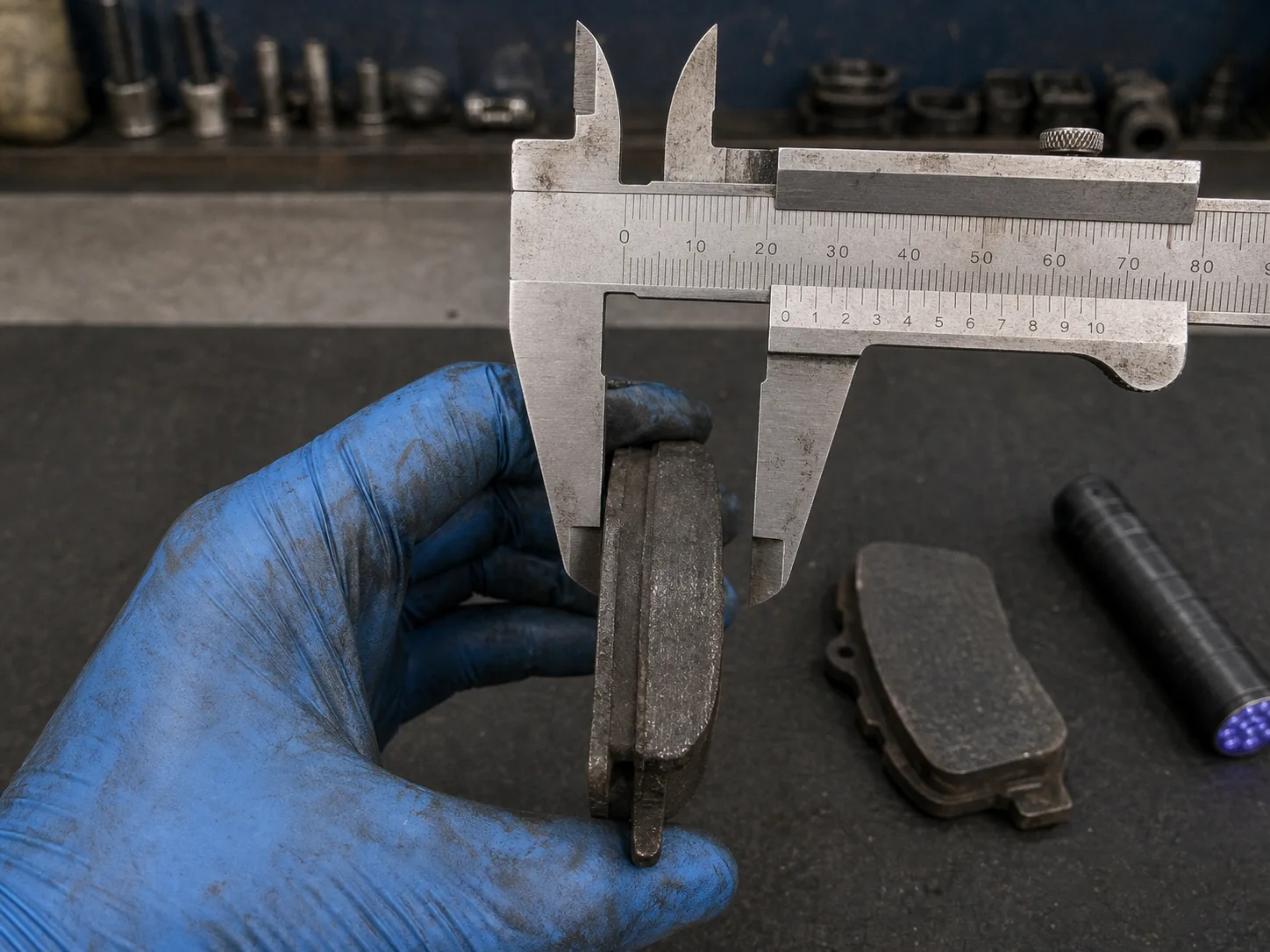
We do not read the odometer and tell you to replace them. We measure the thickness in millimetres and tell you the number.
What owners describe
- A squeal under light braking
- The steering shakes when braking from speed
- It takes longer to stop than it used to
- The pedal has gone soft, or sinks slowly
- The car pulls to one side when braking
- A grinding, metal-on-metal noise
What we check
- Pad thickness on all four wheels, in millimetres, left and right separately
- Disc thickness against the minimum stamped on the disc itself
- Disc surface, the lip at the edge, and runout
- Caliper pistons, slide pins and boots
- Brake fluid moisture, as a percentage
- Flexible and rigid lines, for leaks and swelling
- The difference in wear left to right — which usually points at a caliper, not at the pads
- Can you keep driving it
- Plan it
A squeal only: yes, but book this week. Grinding, or a pedal that keeps sinking: do not drive it. Telephone us.
- How long
- 2 to 4 hours
- Booking
- Booking needed
- Parts typically involved
- Pads, discs, slide-pin kits, fluid, flexible hoses
03
Suspension and steering
A noise from underneath is the easiest thing in this trade to get wrong, and the thing most often over-replaced.
What owners describe
- A knock over speed bumps
- A clunk on full lock, or when turning
- It wanders, and you keep correcting
- One tyre wearing unevenly across its width
- A vibration at one speed that then goes away
What we check
- Static, on the ground, bouncing each corner
- On the lift, a pry bar on every joint, play measured
- Left compared with right — the wrong one is the one that differs
- A road test, on the same 3.2 km loop every time
- Shock bodies checked for an oil film
- Can you keep driving it
- Plan it
Usually yes. But if the noise changes with steering load, book now — that group of symptoms includes ball joints.
- How long
- 1.25 hours to diagnose, then it depends on what is found
- Booking
- Booking needed
- Parts typically involved
- Shocks, lower arms, ball joints, tie rod ends, stabiliser links, bushes, wheel bearings
Our rule in this area
We do not replace several chassis parts on one description. If it is not yet clear which joint is talking, we repair in stages and say plainly that it is not yet clear.
04
Cooling system
A small leak left long enough stops being a cooling job and becomes an engine job.
What owners describe
- The gauge climbs above normal in traffic
- A sweet smell after parking
- A patch on the floor where it was parked
- The reservoir is low again
- The heater is cold, or the air is inconsistent
- The radiator fan runs all the time
What we check
- Pressure test at 1.1 bar, timed to see whether it holds
- The cap, tested separately — it fails more often than people expect
- Radiator, water pump weep hole, thermostat
- The fan — both that it runs and how much current it draws
- Upper and lower hoses, for softness and swelling
- If the symptoms warrant it, a combustion-gas test in the coolant
- Can you keep driving it
- Repair now
If the gauge goes above normal, stop. A tow always costs less than a head gasket.
- How long
- 1 hour to test, then it depends on what is found
- Booking
- Booking needed
- Parts typically involved
- Radiator, water pump, thermostat, fan, hoses, cap, coolant
05
Air conditioning
Refrigerant is not a consumable. If it is low, it went somewhere.
What owners describe
- Cool, but not cold
- Cold when moving, warm at idle
- A smell when the air first comes on
- A noise when the compressor engages
- Air only comes out on the highest fan speed
What we check
- Vent temperature, against the ambient temperature that day
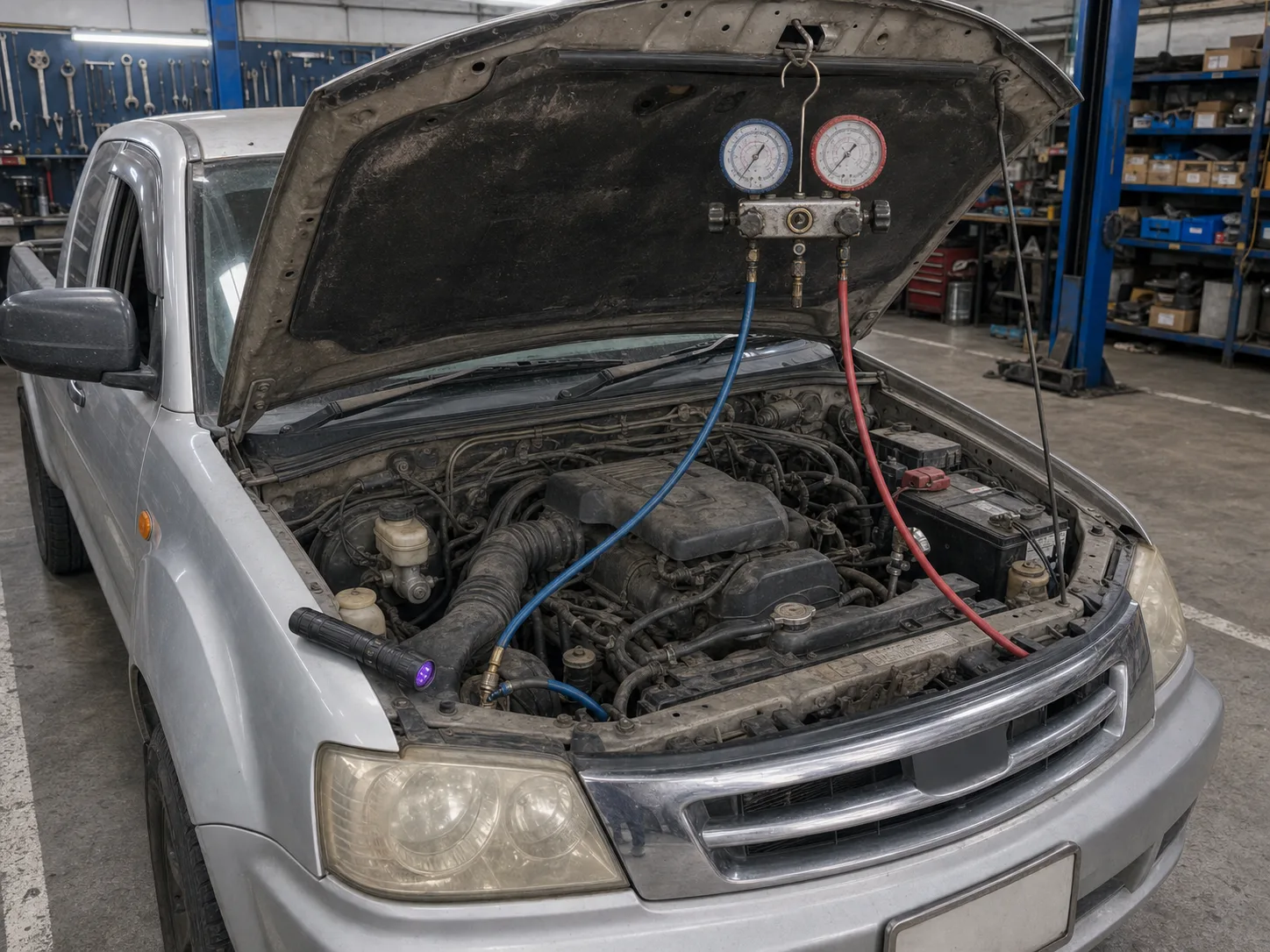
- High and low side pressures, at idle and under load
- Compressor clutch gap, and whether it engages cleanly
- Condenser and condenser fan, with the fan’s current measured
- Cabin filter, and the blower on every speed
- If refrigerant is low, UV dye and a leak hunt first — not a top-up and goodbye
- Can you keep driving it
- Monitor
Yes. This is comfort, not safety — unless the compressor is making a noise it did not make before.
- How long
- 1.75 hours to test
- Booking
- Booking needed
- Parts typically involved
- O-rings and seals, receiver/drier, refrigerant, compressor oil, cabin filter, fans
06
Battery and charging
We send you the printed test result, not the sentence “your battery is nearly finished”.
What owners describe
- Slow to crank in the morning
- The dash flickers when starting
- The battery light comes on
- It has needed a jump start
- It dies after two days parked
What we check
- Rest voltage, after at least two hours off
- A CCA load test on the machine, with a printout
- Alternator output at idle and at 2,000 rpm, and AC ripple
- Starter motor current draw
- Parasitic draw with everything off, in milliamps
- Terminals and earth straps — cleaned free
- Can you keep driving it
- Plan it
If the battery light is on while driving, drive straight here or straight home. Do not switch it off on the way.
- How long
- 1 hour
- Booking
- A battery test alone is a walk-in
- Parts typically involved
- Battery, alternator, starter motor, terminals, cables
07
Warning lights and diagnostics
A code tells you what the computer noticed. It does not tell you which part is broken.
What owners describe
- The check engine light is on
- The ABS light is on
- Hard to start
- A rough idle
- Fuel consumption noticeably worse
- It hesitates when you accelerate
What we check
- Every module scanned, not only the engine ECU
- Freeze frame captured, to see the conditions the fault happened in
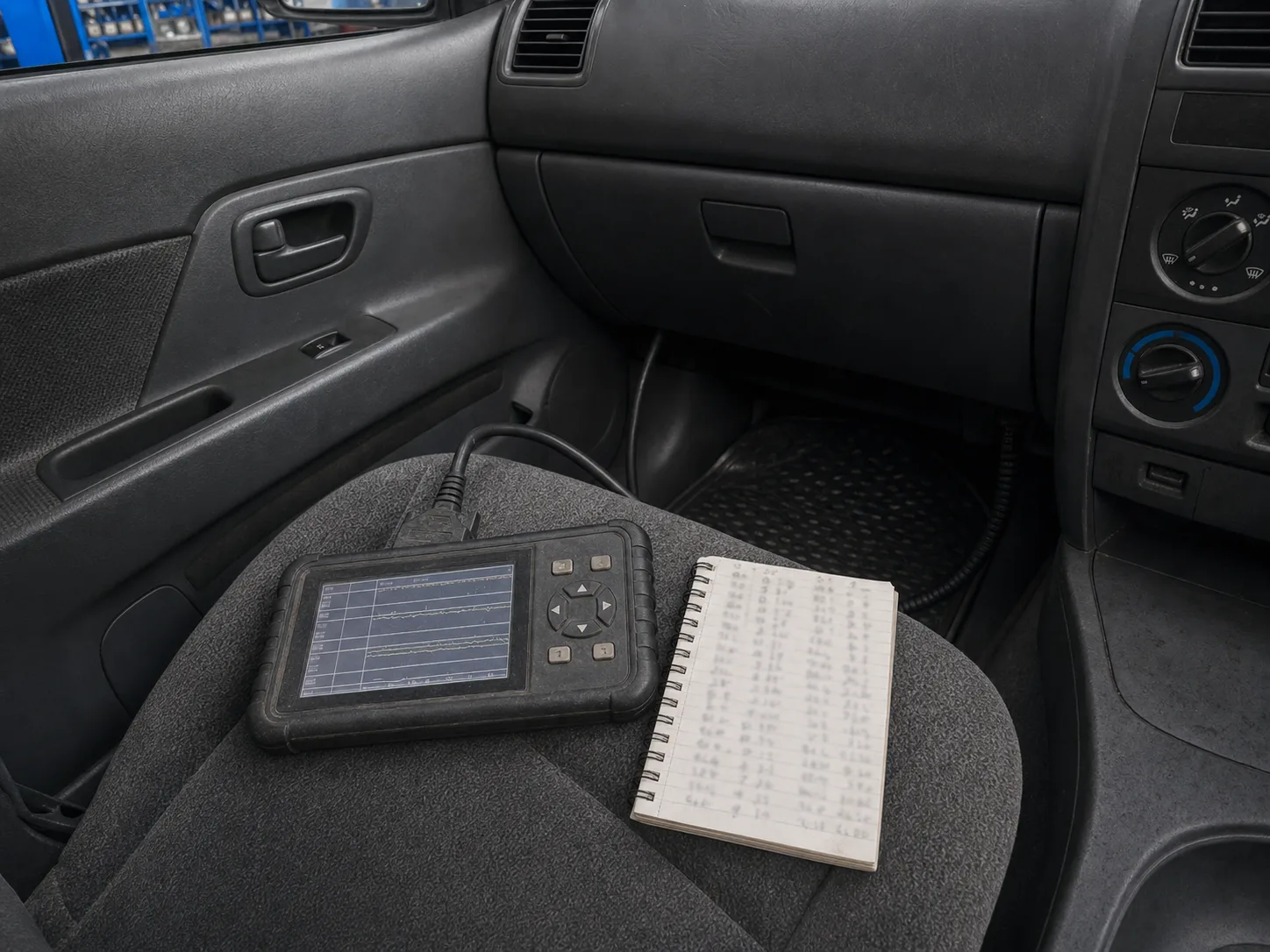
- Live data watched, and logged during a road test
- Then targeted tests: a smoke test for leaks, fuel trims, sensor signal read at the connector
- Can you keep driving it
- Plan it
A steady light: yes, book it in. A FLASHING check engine light: stop driving — flashing means fuel is going into the exhaust.
- How long
- 1.5 hours to scan and report
- Booking
- Booking needed
- Parts typically involved
- Whatever the test points at — and sometimes the answer is one hose
Our rule in this area
Worked example: a P0171 lean code has at least six possible causes — the sensor itself, a poor connection, damaged wiring, an intake air leak, a fuel-delivery problem, or the exhaust. Six causes, one code.
What a check actually looks like